“Navigator” programme · task 1
Navigator trainer
The navigator ladder: ten levels of real orbital mechanics. You drag the impulse arrow right on the ship, and the orbit changes as you move it; the flight button really flies; a miss stays on the map as a trace, and each level ends with a report showing stars and numbers. No boxes to type numbers into, no multiple-choice tests.
The trainer is open. The ladder map is already on screen: the first level, “Raise the Near Point”, takes a minute, and your dashboard shows stars by level, rank, patches and your personal file.

How to use it
Five moves to a pass
- Press “+ impulse”
An impulse arrow appears on the ship. Its length is the number of metres per second; its direction is where you push. While the arrow is still empty, a handle pointing along the direction of motion stands in for it.
- Drag the arrow
The forecast updates as you drag: the pink line shows where the orbit will lie, two pale circles show where you and the target will be at closest approach, and the label next to them gives the distance and the difference in speed.
- Move the moment
The yellow marker on the orbit is the moment of the impulse. You drag it by hand too: the same push at a different point on the orbit gives a different orbit, and that is the main thing the course teaches. A second impulse is added with the “+ impulse” button, placed straight at the point of closest approach.
- Execute and read the report
When the label by the circles turns green, “Execute” turns green as well. The ship flies the plan with time acceleration, the docking autopilot takes care of the remainder, and the report arrives: Δv, time, minimum approach, number of impulses and the Academy benchmark.
- Try to be more economical
You have as many attempts as you like: each one leaves a labelled trace showing exactly where you missed. A completed level can be flown more cleanly, and your best result is kept in your personal file: one star for a solution within tolerance, three for a precise solution without hints.
Show the calculation
The “Calculation model” button opens an honest map: the two-body problem, instantaneous impulses, vis-viva, Hohmann as a benchmark, a search grid for closest approach, and a list of what is openly left out.
Personal file
Progress is stored in this browser: stars by level, your best result on each, exams passed, patches and settings. You can download your personal file, and open someone else's challenge from a link; you'll get exactly the same level as the sender.
On a phone
On a phone, you drag the arrow and the marker with your finger and zoom with the on-screen buttons. On a computer, the handles also work from the keyboard: arrow keys move the selected handle, Shift makes it finer, and Ctrl + wheel zooms in, so normal scrolling leaves the scene alone.
Other programmes
Signals officer, pilot, jumps, timekeeper, planet, mechanic, captain and exams
Signals officer, pilot, jumps, timekeeper, planetary engineer, mechanic and captain: each has its own ladder of ten levels. Exams stand as gates at levels four and eight, and a watch on the Swift brings together one level from each profession into a single run. The patches are already drawn, so there's simply no backing out now.

Pilot
Hands, hull and a feel for mass: easing thirty-eight tonnes into the node by touch. Ten levels take you from “stop a drift with a single pair of thrusters” to docking with a rotating station: kill a tumble, bring the ship up to the node and close the latches, deal with loose cargo containers on board, and dock without a stabilizer. Suitable even for those who've only ever driven a forklift on Karadag.

Captain
Decisions, crew, insurers and debts: the Academy's most honest course. Ten situations, from a single call to an entire watch: two calls and one ship, one of Pitz's men who is “almost legal,” a mine owner who has declared the second shift unrecoverable. Every option shows you the numbers before you choose, people's air keeps running out while the captain thinks, and afterwards we spend four months waiting for the insurer's lawyer to stop looking for something to nitpick.

Signal Officer
Nodes, dead zones, planetary shadow, and light that takes its time. Ten levels: place relays so the channel holds for the whole cycle, through the planet's shadow, a settlement on the far side of a moon, a chain across the entire system, a ship under way and a full network. The course is taught by the cartel that keeps those communications running.
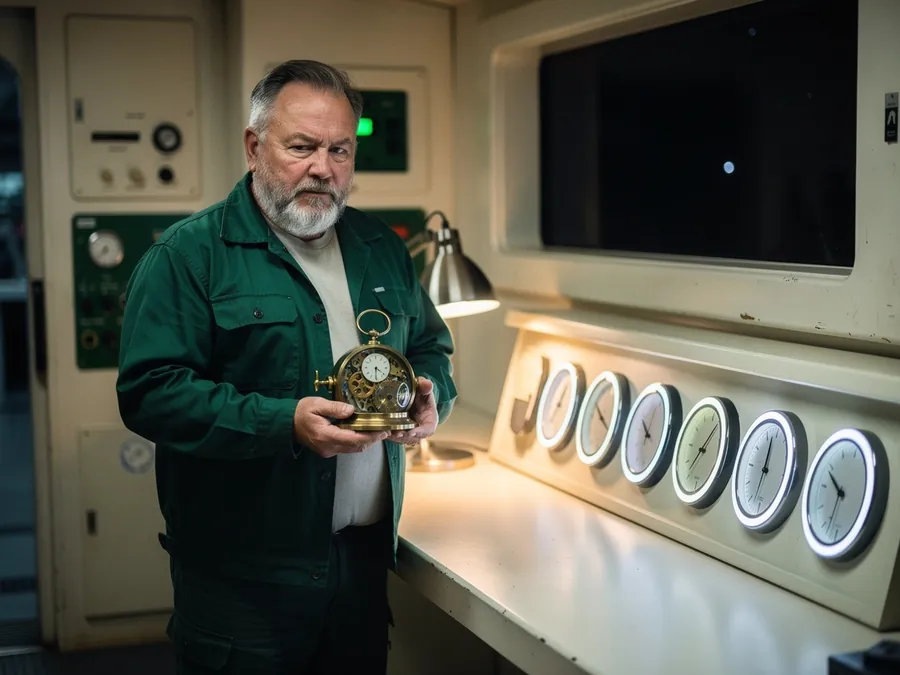
Timekeeper
In the Arm, everyone keeps their own time: light travels for minutes, and your screen always shows the past. Ten levels: put the marker where the courier will be, not where you see it; sync two ships' clocks by exchanging signals; arrange a blind rendezvous; and crack the insurer's “Four Minutes” case, where someone else's clocks are both offset and running fast.
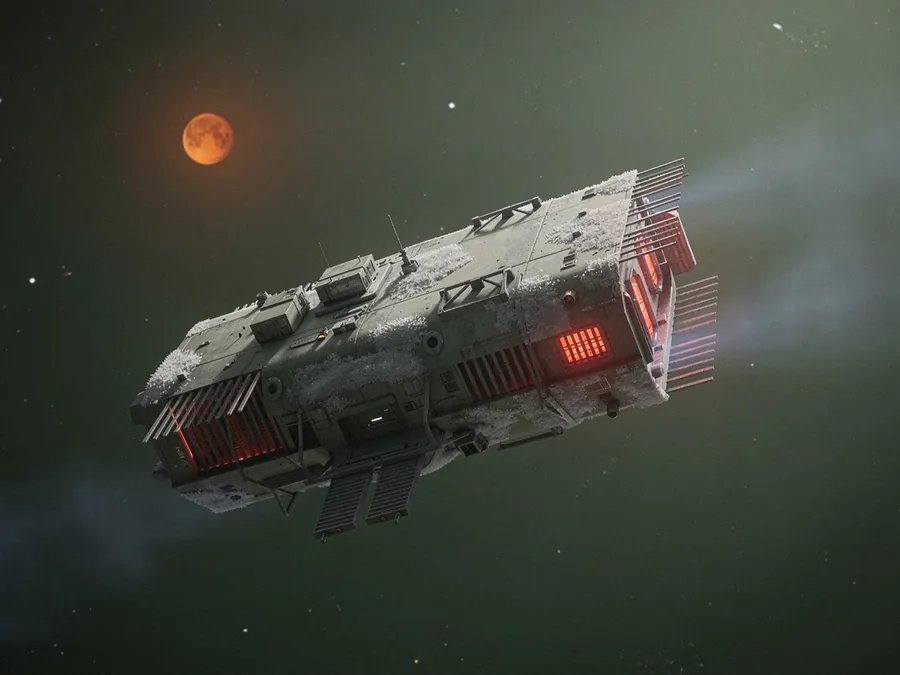
Jumps
A node jump by beacon and a blind jump into the unknown: five light-years, forty hours of cooldown, crystals from an unfamiliar batch, and an exit point with a margin of error. Ten levels: a direct run, refueling via a node, crystals from the wrong batch, a blind sector where the route is redrawn after every jump, and a convoy of three ships with different air reserves.
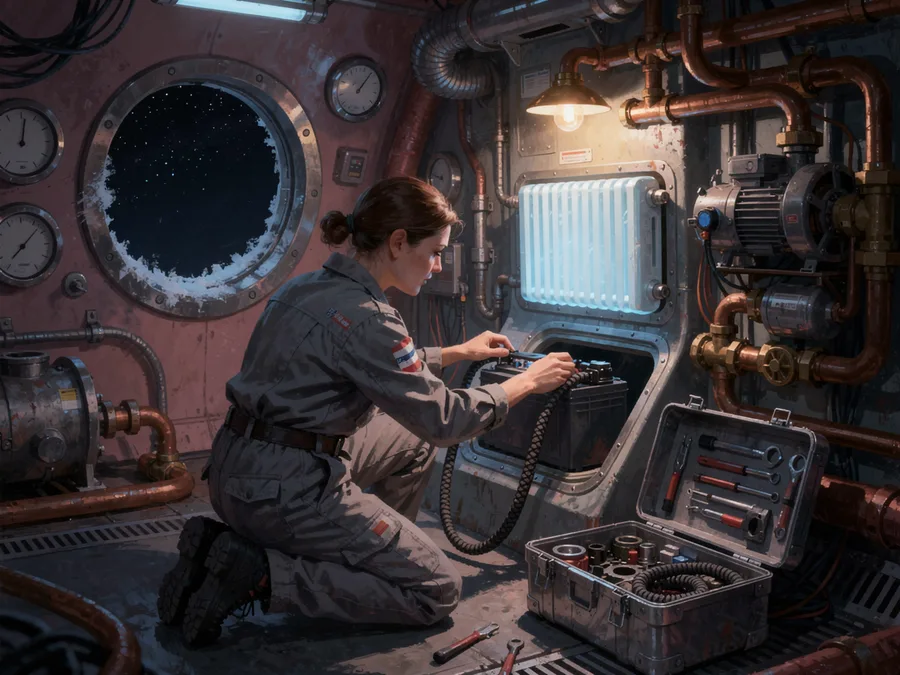
Mechanic
A construction kit on the ship's schematic. Parts from the crate snap into sockets, power, air and heat lines connect them, and the schematic comes to life only if it's built honestly: current flows through a closed circuit, every watt is dumped by a radiator, air circulates, and the center of mass stays within tolerance. Ten levels, from a lamp and a battery to a fully assembled Swift. On level eight the air runs out for real, which is to say, on a timer.
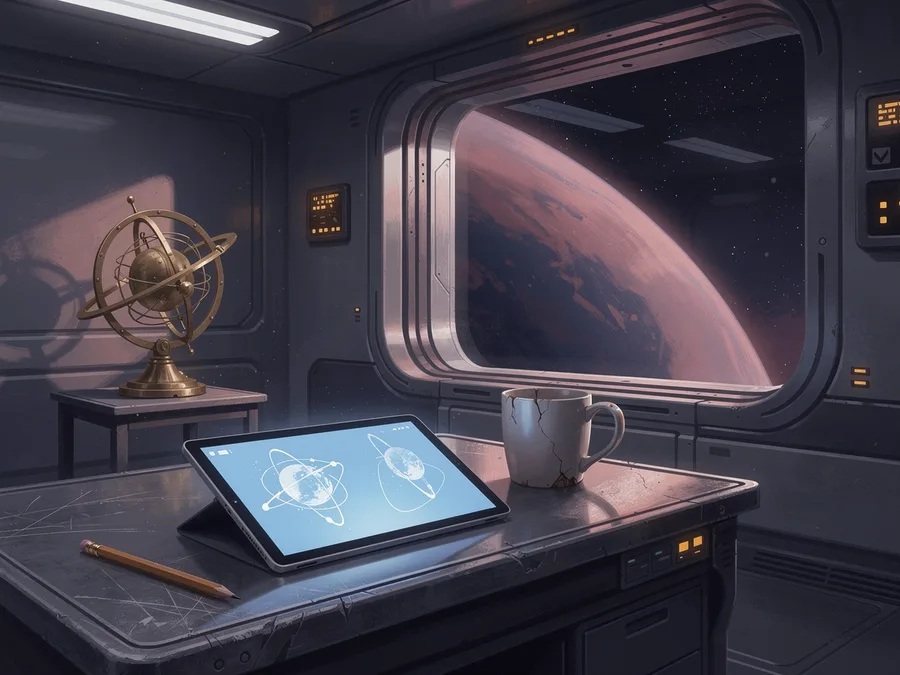
Tests
Short tests with diagrams: where to burn to raise an orbit, why the screen always shows the past, how to ease thirty-eight tonnes into a node, how long it would take Earth to fall into the Sun, what kills you first in a vacuum, how to shield yourself from radiation, how long to wait for a launch window home from Mars, and why there are antennas on three continents. Nine tests, an explanation after every answer, and as many retakes as you like. On the career ladders they stand as gates: at levels four and eight there's a test on the topic. Passing it adds a star to your rank, and a flawless pass earns two stars and a patch.
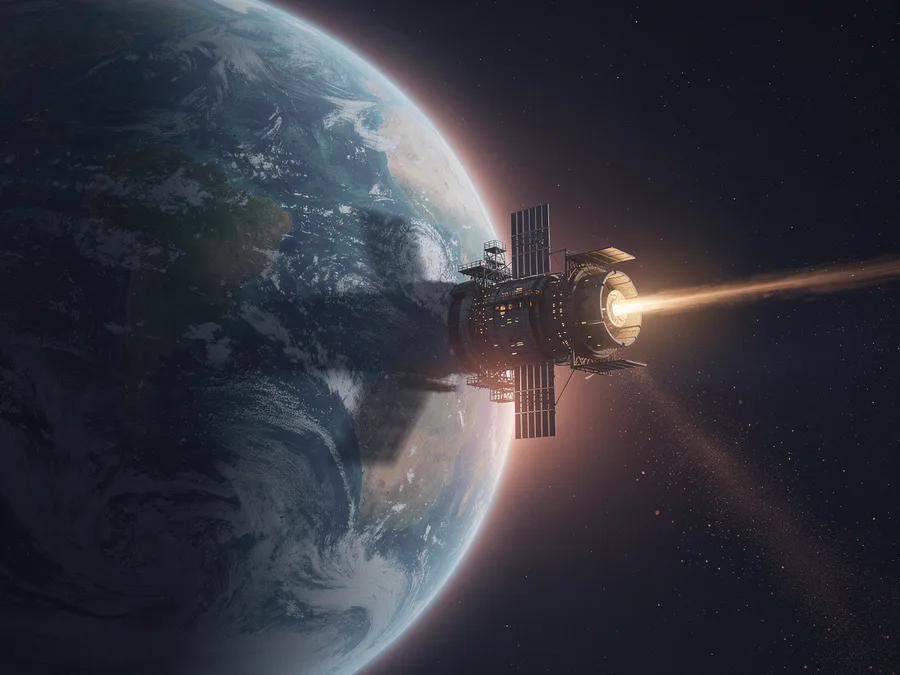
Planetary Engineer
The star is heating up, but nudge the planet out just a little and the climate comes back. The engine sits on the equator: the jet shoots up into the sky and pushes the planet “down,” and over a day that push sweeps around every direction. The exhaust points backward along the orbit only at sunset. On the upper levels you tow the moon along with you. Push when it's off to the side, or its orbit gets stretched and the tides go haywire.