Free browser games · nine simulators
Physics games: space where the real laws apply
The Laspi Academy is nine free browser games governed by real laws of physics: universal gravitation and Kepler's laws, conservation of momentum and angular momentum, the finite speed of light. Your ship follows an orbit calculated with the same formulas used for satellite trajectories — not “like in the movies.” The games were made for Marta Milodanovich's series “Arvi's Crystal Lace”; you can play on your phone, with no sign-up and nothing to install.
Why this is physics, not “close enough”
In most space games, the ship goes wherever its nose points. Not here: a forward burn raises the opposite side of your orbit, to catch up with a convoy you have to slow down, and a spinning module will keep spinning until you cancel it with a counter-burn. These aren't rules invented for the game but consequences of Newton's laws, and they surprise players exactly the way they surprise real cadets.
Under the hood are honest calculations in SI units. The gravitational constant G = 6.674·10⁻¹¹ N·m²/kg², the two-body problem is solved exactly (universal variables and Stumpff functions), the moon's pull is added by fourth-order Runge–Kutta numerical integration, a module's rotation follows Euler's equations for a rigid body, and signals travel at 299,792,458 m/s. The calculations are verified by automated tests: for example, 10,000 revolutions of an elongated orbit with no drift in energy or angular momentum, and each of the eighty levels across eight ladders has been checked against a reference solution.
In every game you can open the model description: what's calculated honestly and what's simplified. The technologies of the book's world — engines that move a planet, a blind jump of five light-years — are fiction, but their consequences are calculated with real formulas.
What you can learn
| Topic | Where it's taught | Game |
|---|---|---|
| Law of universal gravitation, orbital velocity, circular and elliptical orbits | physics, grades 9–10 | Navigator |
| Kepler's laws: periapsis and apoapsis, orbital period | physics grade 9, astronomy | Navigator |
| Hohmann transfer, phasing, sphere of influence, gravity assist | orbital mechanics | Navigator |
| Inertia, Newton's third law, jet propulsion, stopping distance | physics, grade 9 | Pilot |
| Rigid-body rotation, moment of inertia, the Dzhanibekov effect | physics grade 10, theoretical mechanics | Pilot |
| Line of sight, planetary shadow, stationary orbit, Hill sphere | astronomy, satellite communications | Comms Officer |
| Speed of light, signal delay, radar ranging | physics, grade 11 | Timekeeper |
| Clock synchronization, least squares method | measurement analysis, university | Timekeeper |
| Orbital energy, the vis-viva equation, the Oberth effect, Earth's perihelion | astronomy, orbital mechanics | Planetary Engineer |
| Light-year, astronomical unit, route optimization | astronomy, mathematics | Jumps |
| Closed circuit, source and loads, power balance | physics, grade 8 | Mechanic |
| Conservation of energy: power turns into heat; radiator emission follows the Stefan–Boltzmann law (T⁴) | physics, grades 10–11 | Mechanic |
| Center of mass, balancing cargo across compartments | physics, grade 9 | Mechanic |
Fifteen games
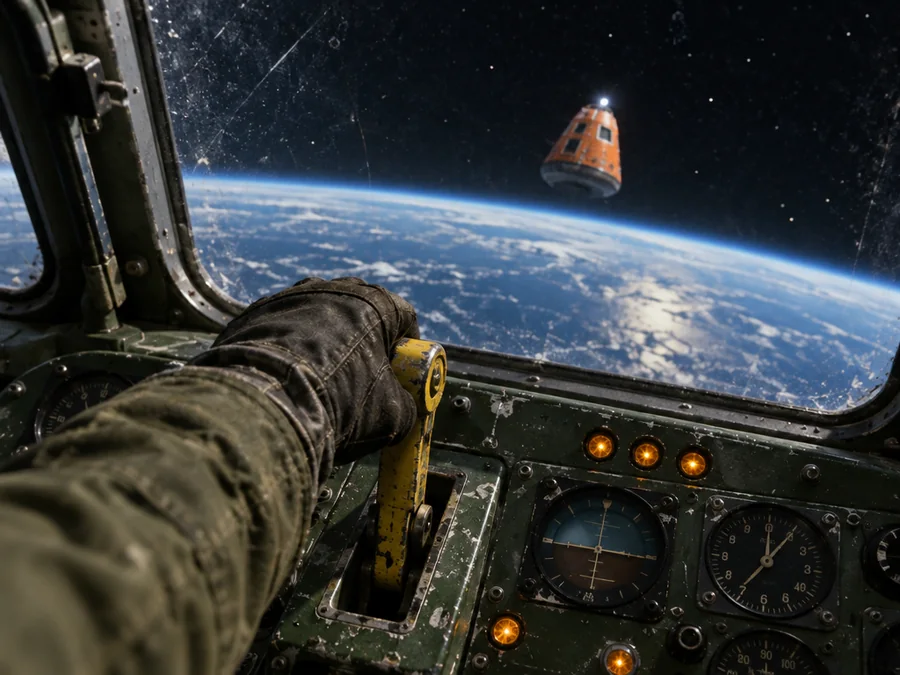
Arcade · endless calls
Rescuer
An arcade game about a rescue ship. The “Swift” circles a planet under real gravity, and escape pods with people inside drift in orbit, each one with its air supply ticking down. You have to catch up with a pod, match its speed, pick it up and bring it home to the station. You play with one finger. Hold your finger on a pod and the onboard computer will close in and brake for you, but it burns more fuel. Fly the ship yourself and you spend less and earn crowns with a multiplier. Every rescue pays in crowns, and crowns buy upgrades: engine, tank, grabber, radar, seats, shield. The calls get harder: debris in orbit, pods on a head-on course, a moon with a pull of its own. The dotted line ahead of the ship shows where it will drift without thrust.
What it teaches: the law of universal gravitation, why a lower orbit is faster than a higher one, rendezvous and velocity matching, and the cost of every burn.
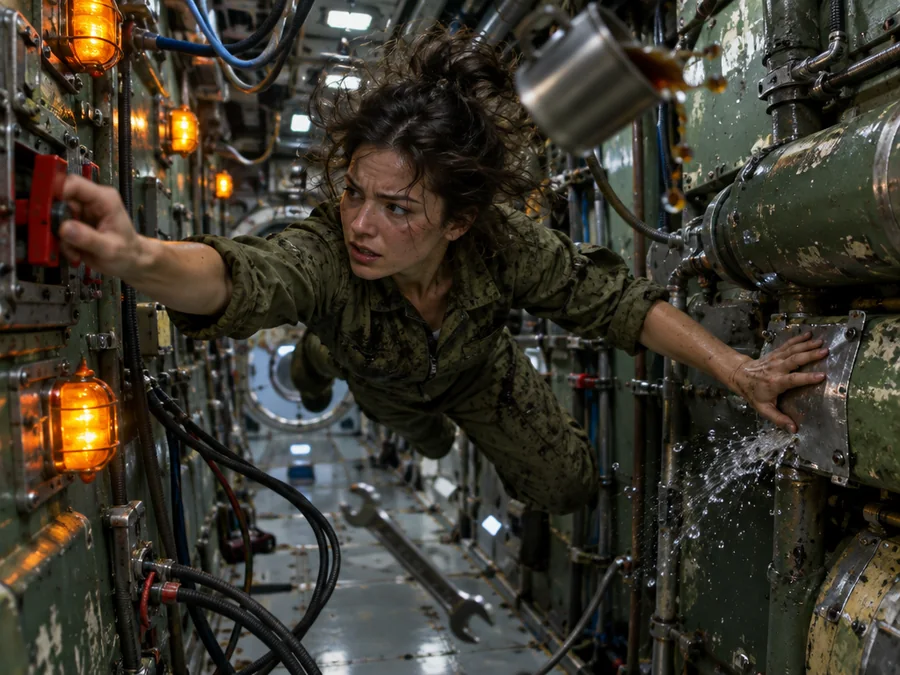
Speed mini-games · high scores
A Shift on the Swift
A fun reflex game. Emergencies on board come one after another, and for each you get a few seconds and a single move: brake the module before it hits the wall, close the circuit, stop the spin, balance the load on the lever, catch a mug in zero gravity, equalize the pressure in the airlock, patch the holes, fire a burn at the lowest point of the orbit. The pace picks up every four tasks; three misses and your shift is over. High scores unlock new tasks and ranks, and after the shift the game names, in a single line, the law behind each task. No explanations beforehand: you feel the law in your hands first.
What it teaches: braking distance, closed circuits, conservation of angular momentum, the law of the lever, Newton's first law, gas flow, leaks through an opening, a burn at periapsis.
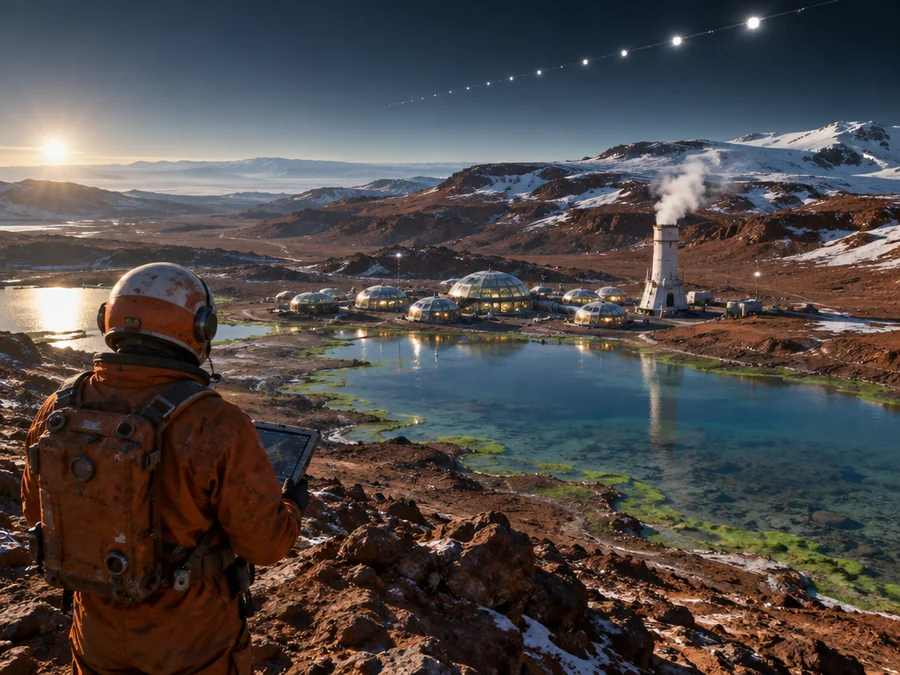
Planet-building · three worlds
Terraform
A city-builder about climate. Your job is to turn a dead planet into a second Earth: build reactors and colonies, melt the polar caps, put mirrors into orbit, drop comets loaded with water and nitrogen, and seed algae. Four gauges — temperature, pressure, oxygen and sea — have to settle into their green zones. The climate runs on real formulas: equilibrium temperature from the radiation balance, a greenhouse correction, ice that reflects light and cools things down, vapor that warms them up, and algae that eat CO₂ and chill the planet. In this model Earth comes out at 288 kelvin and Mars at 210. Three worlds, one after another: a cold desert, a ball of ice, and a scorching hothouse you have to cool down without freezing it solid. Your advisor tells you, in a single line, what hurts the most.
What it teaches: radiation balance and the Stefan–Boltzmann law, albedo, the greenhouse effect, the “ice–albedo” and “heat–vapor” feedbacks, the carbon cycle.
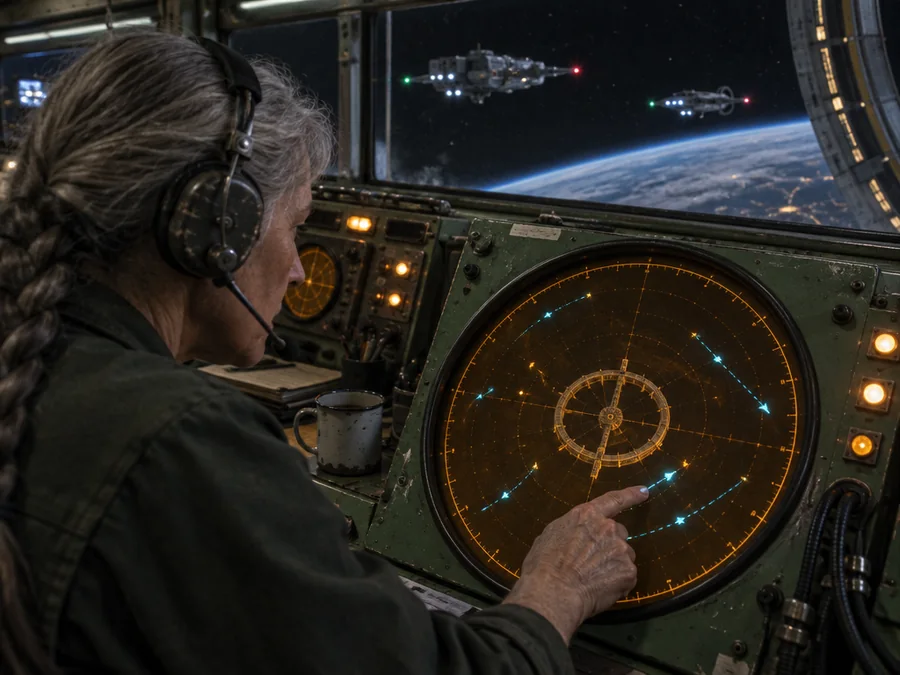
Shifts · station upgrades
Tessa Dispatch
A game about a dispatcher at a node station. Ships come in from every side and circle in a holding pattern for as long as their patience lasts. The dispatcher draws each one a path to the berth of its color: drag a finger from the ship to the gate, or use two taps, ship first, then berth. Two real laws turn this into a puzzle. Commands travel at the speed of light, so a distant ship gets its order later and holds its old course until then. On screen you can watch the signal wave run out from the station. And a ship has inertia: it can't turn tighter than its radius, and the faster it goes, the wider the arc. If paths cross, ships collide; steer a ship into the station ring, and it crashes. Shifts pay in crowns, which buy new berths, cranes, a relay and a tug.
What it teaches: the finite speed of light and signal delay, inertia, turning radius v²/a, queues and priorities.
Choice-driven stories · seven endings
Captain: Voyage
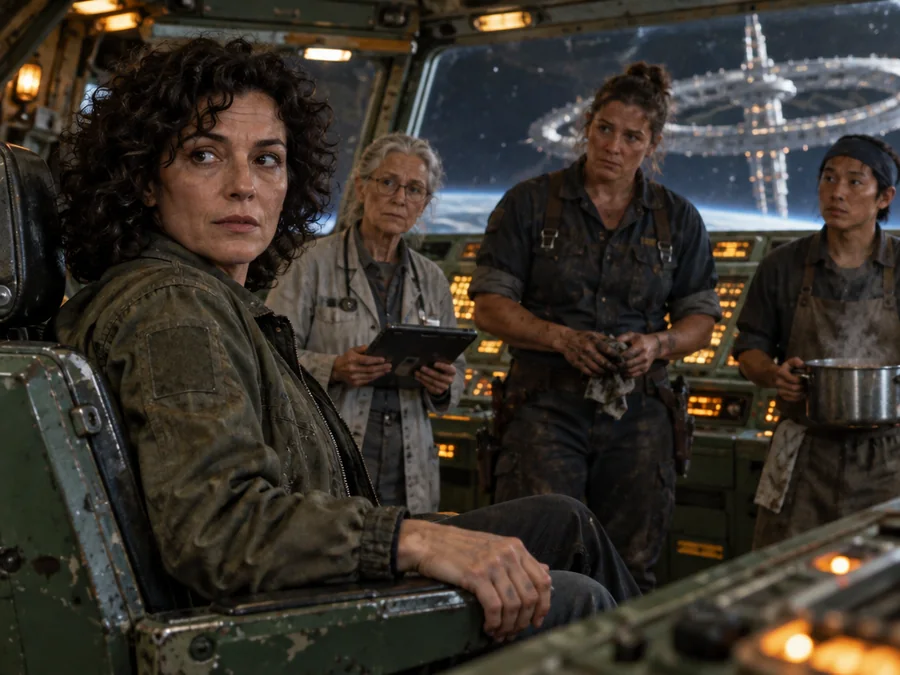
A story game about the captain of a rescue ship. A voyage is a deck of events: someone from the crew comes to you with trouble, and the captain has two choices. A distress call with honest numbers: five people, twenty hours of air, eight hours to reach them, and the engine still hot. The insurer asks you to put four rescued in the report instead of five. The mechanic warns that the loop is running hot. The cook says the soup is running out. Every decision moves four gauges: fuel, crew, crowns and trust. Any of them hits zero, and the voyage ends with its own ending. The buttons show which gauges a decision will touch, but not which way: you have to do the math yourself. Trouble you put off comes back: a loop you didn't fix will die mid-voyage. Seven endings, two event decks, and the long voyage unlocks after your first successful one.
What it teaches: calculating time and air margins, deciding under a stated risk, the cost of putting off repairs, balancing people and money.
The game that learns from you · 55 questions
Flight Clearance
Questions on the real physics of space, chosen by the game to suit the player. A watch is ten questions, each followed by an explanation. The game remembers every answer: get one wrong, and it comes back after three others, then again in the next watch, and keeps coming back until you've learned it. Answer correctly twice, with a gap in between, and the question counts as learned and moves to occasional review. Questions you know get harder: instead of answer options, you see someone else's answer and have to say whether it's right. The preparation screen shows what the game knows about you: which topic has the most mistakes, what's waiting to return, how much you've learned. Nine topics: orbits, light and clocks, mass and docking, transfers, survival, radiation, launch windows, bases on the Moon and Mars, long-range communications. Get every topic to one hundred percent, and you earn first-class clearance.
What it teaches: why you catch up by braking, where burning fuel pays off most, how long a signal takes to reach Mars, what shields you from radiation, what's dangerous in a vacuum, and why launches to Mars happen once every two years.
10 levels · orbital mechanics
Navigator
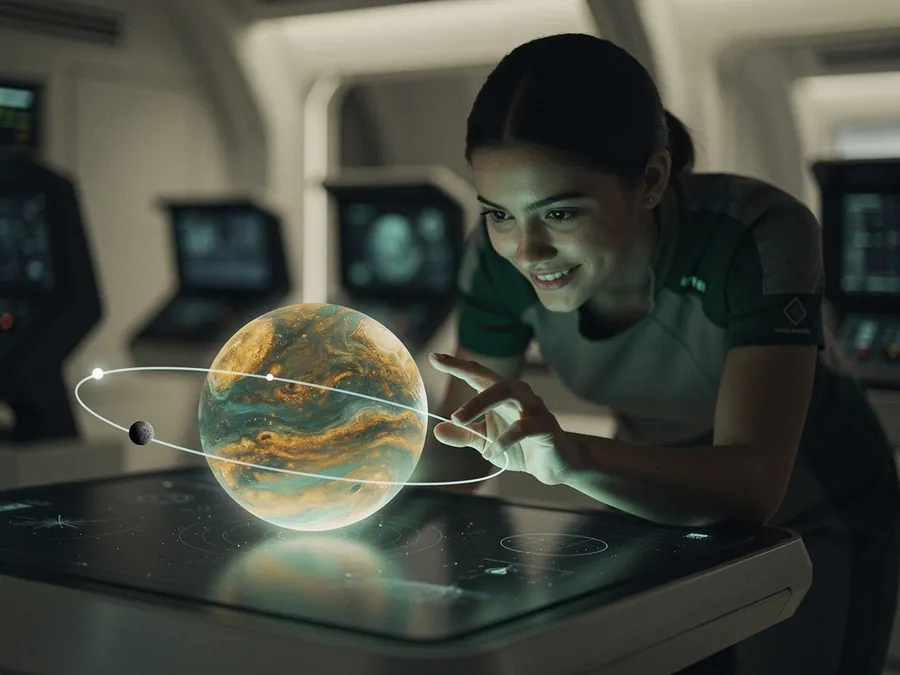
An orbital mechanics simulator. Your ship is orbiting a planet; the target is another orbit, a convoy or a vessel at a different phase. You drag the orbit by hand, and the model calculates the burns and shows where the ship will actually go. Ten levels: raise and lower the periapsis, a Hohmann transfer, catch up with a convoy (to catch up, slow down), rendezvous with a vessel, capture at a moon, a gravity assist, an intercept against the clock, a turnaround onto a retrograde orbit and a route to three targets. The moon's gravity is real: it has its own sphere of influence, and a close flyby speeds the ship up without spending fuel.
What it teaches: Kepler's laws, the Hohmann transfer, phasing and orbital rendezvous, sphere of influence, the gravity assist.
10 levels · rigid-body mechanics
Pilot
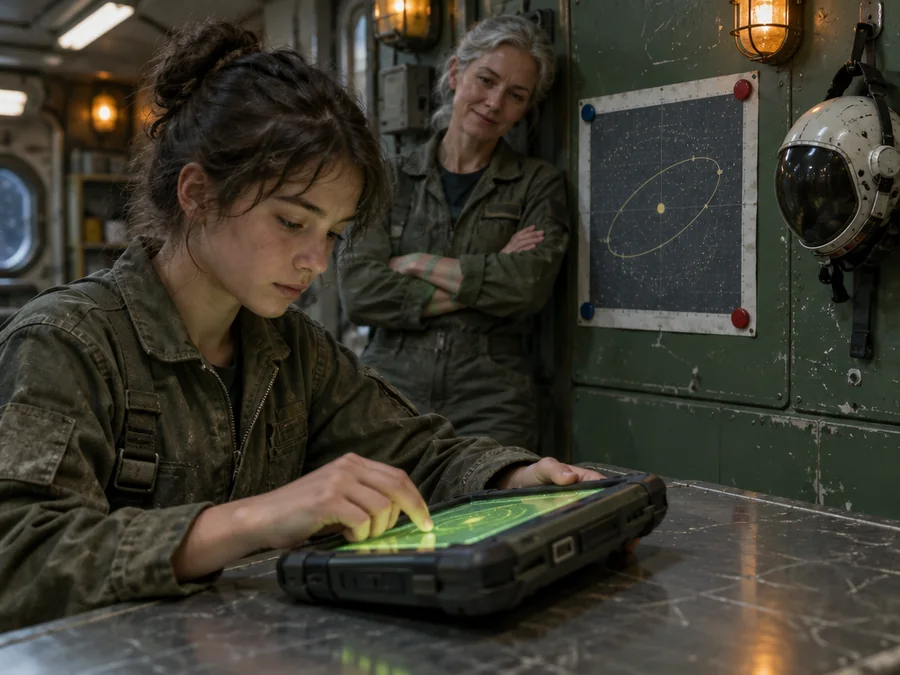
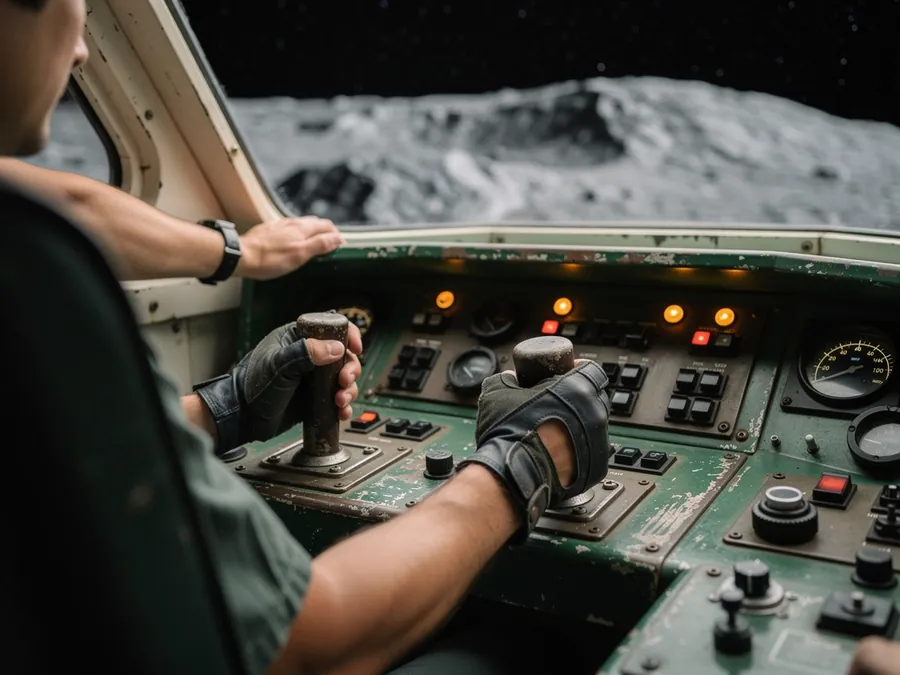
A spacecraft docking simulator. The module is a rigid body with inertia: push it and it drifts, spin it and it keeps spinning until you stop it. Rotation and translation thrusters fire for as long as you hold the button. Ten levels, from “stop the drift with a single pair of thrusters” to docking with a rotating station: a tumble on three axes, stopping distance, a side port, a module with cargo containers where the Dzhanibekov effect kicks in, docking without a stabilizer and docking on fumes. Three stars means the latches touch at no more than 0.12 m/s.
What it teaches: inertia, Newton's third law and jet propulsion, stopping distance, rotation and moment of inertia, the Dzhanibekov effect.
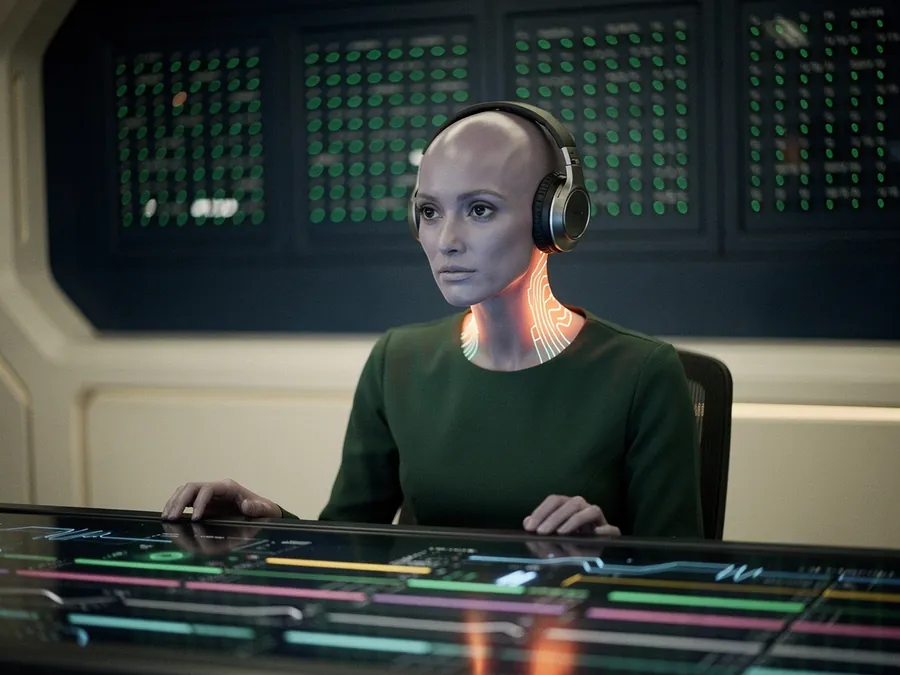
10 levels · the geometry of communication
Signal Officer
Your job is to keep the station's link to the node open for the whole cycle by placing relays in orbit. Planets and moons block the line of sight, their shadows are shown on screen, and the cycle bar shows when the link is up and when it drops. Ten levels: the planet's shadow, a settlement on the far side of a moon (the answer is a stationary lunar orbit inside the Hill sphere), a relay chain, three bodies, a range of 10 light-minutes, a link to a moving vessel, the relay limit, a dead zone, a relay that keeps losing altitude, and a whole network. Signal delay is calculated from the speed of light.
What it teaches: line of sight and shadow, orbital period, stationary orbit, the Hill sphere, signal delay.
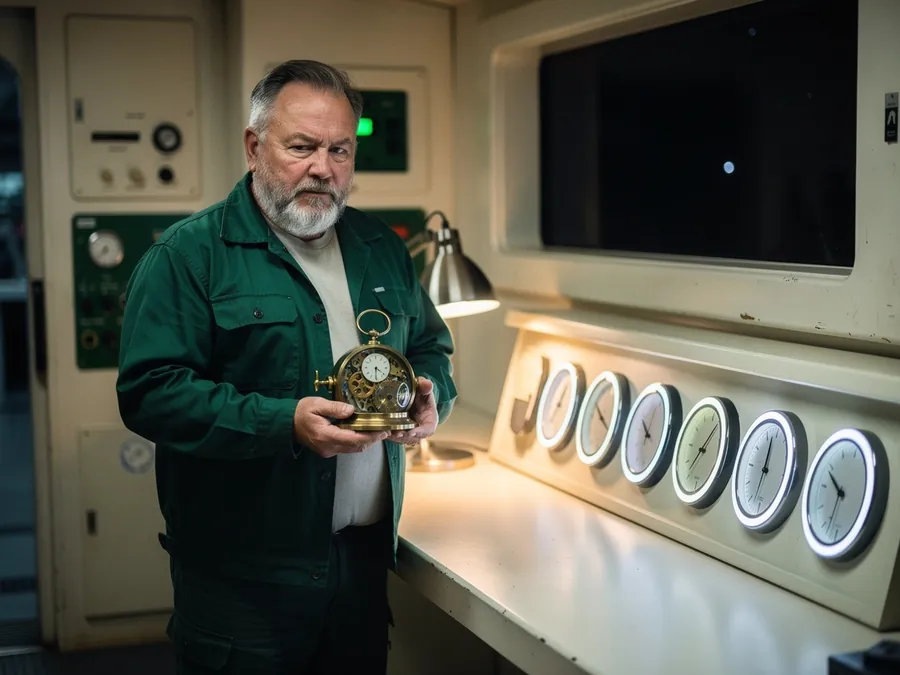
10 levels · the speed of light and clocks
Timekeeper
Where is the target really, if you see it late? Light and radio take time to travel, and that is a chronometrist's daily work: finding range from when pings are sent and received, leading a moving target, syncing the ship's clocks with the station. Ten levels: a stationary target, leading, a fast target, a clock check, the meeting point, an accelerating target, three logs, clocks that run fast, a signal through a relay and the case of the “Four Minutes” insurance company: working out the offset and drift of someone else's clocks from four pings. Offset and drift are found by the least squares method, just as in processing real measurements.
What it teaches: the speed of light, signal delay, radar ranging, clock synchronization, the least squares method.
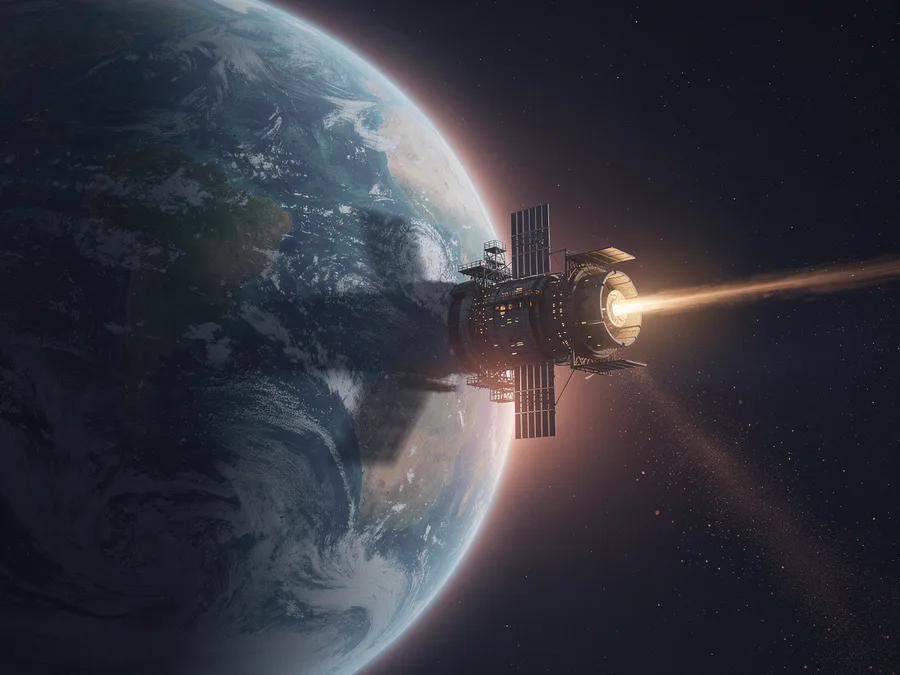
10 levels · orbit and climate
Planetary Engineer
The star is heating up, and you've been asked to move the planet outward by a fraction of a percent. The orbit is Earth's real one: eccentricity 0.0167, perihelion in early January. You choose the day of the year, the local time at an engine on the equator and the impulse. Because the planet rotates, the jet points backward along the orbit only at sunset, and a push near perihelion pays off more thanks to the Oberth effect. In the second task the planet has a moon, and the wrong phase will wreck its orbit. The engines are technology from the world of the books, but their impulse is calculated honestly, and it is monstrous.
What it teaches: orbital energy and the vis-viva equation, perihelion and aphelion, the Oberth effect, planetary rotation.
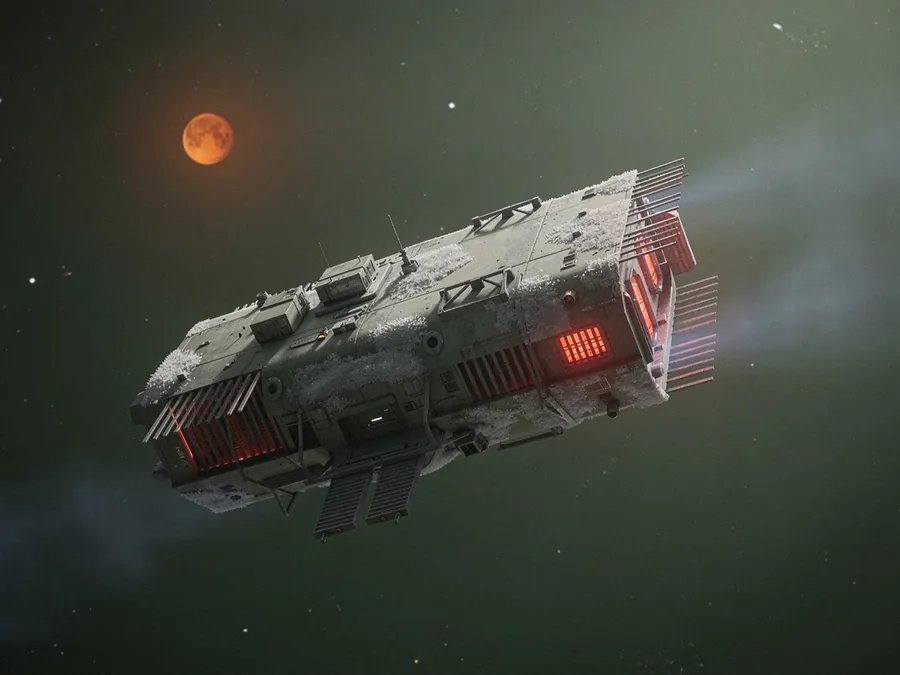
10 levels · route and fuel
Jumps
The blind jump is a technology of the Arm world: no more than five light-years at a time, forty hours of cooldown after each one, an exit point with an error margin, and fuel measured in grams of antihydrogen. Your task is to plot the route. Short jumps are more accurate and cheaper; long ones are faster, but the error and fuel use grow quadratically, and after exit you still have to fly to the target within the system. Ten levels: a single jump, range, refueling at a node, a short final jump, crystals that burn out off-schedule, a blind sector, choosing a node, an intercept within a window, grams versus hours, and a convoy of three ships with different air reserves. The jump itself is fiction, but the route is a real optimization problem: time, fuel and accuracy all pull in different directions.
What it teaches: the light-year and the astronomical unit, quadratic dependence, optimizing a route for time and fuel.
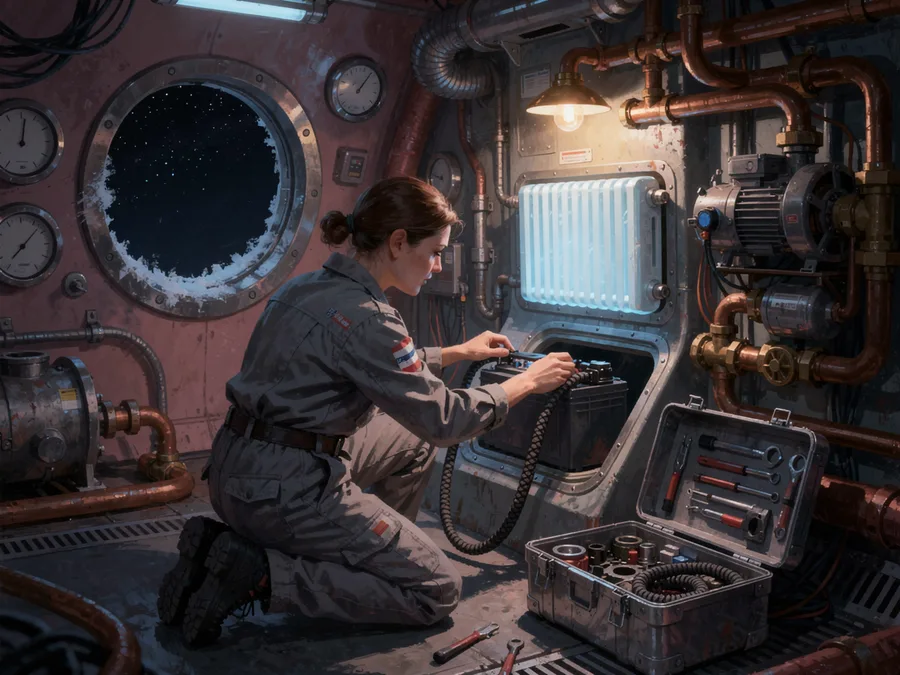
10 levels · circuits, heat, mass
Mechanic
A construction kit on a ship schematic: parts from the crate snap into slots and connect with lines for power, air and heat. The schematic comes alive only when it's built honestly: current flows in a closed circuit, the total wattage of the consumers doesn't exceed the source, every watt is radiated away by a radiator according to the Stefan–Boltzmann law, air circulates through a check valve, and the center of mass stays within tolerance. Ten levels, from a lamp and a battery to a fully assembled Swift within its mass and power budget; level eight is an emergency with the air running out.
What it teaches: closed circuits, power balance, conservation of energy (power = heat), T⁴ radiation, center of mass, direction of flow.
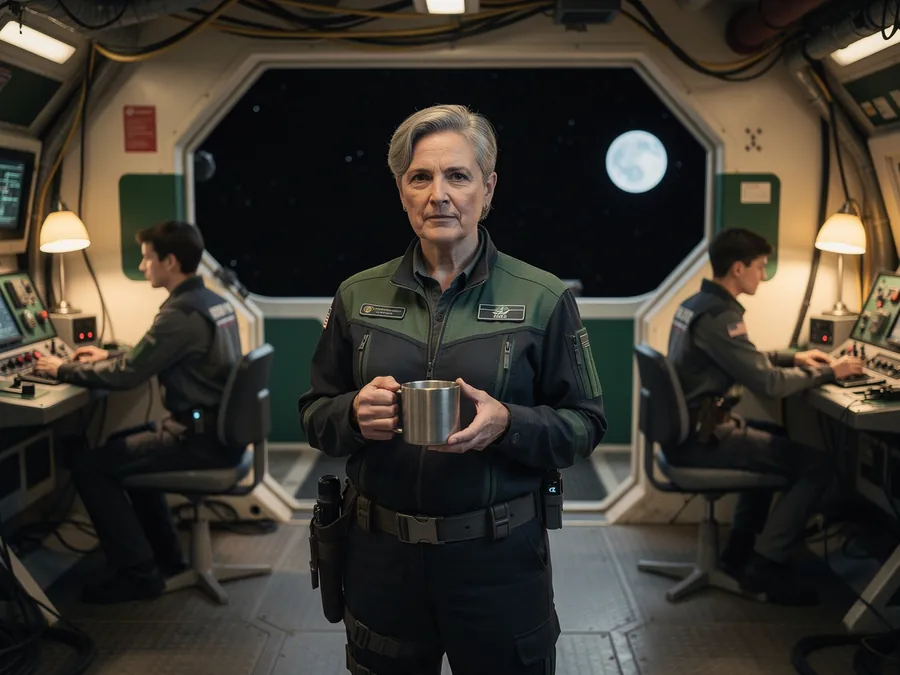
10 levels · decisions by the numbers
Captain
This one isn't about physics but about decisions: two distress calls at once and only one ship, an insurance company looking for an excuse not to pay, a mine where the second shift has been declared “unrecoverable”. Every option shows the hours, air and money before you choose; only the risk stays hidden. A captain learns to measure reserves in time rather than in headcount, and to see the price of a decision in advance.
What it teaches: calculating your time margin, comparing options by the numbers, making decisions under risk.
Nine tests · gates on the ladders
Tests
Nine tests: orbits, light and clocks, mass and docking, interplanetary transfers, survival, radiation, launch windows, life on base, and communications. Questions and answers come in a different order every time. You pass with 80% correct, and a perfect score earns a patch. On the career ladders the tests stand as gates: at levels four and eight the map offers a test on the topic, and passing it adds a star to your rank. A good check after the games: did you understand the law, or just memorize the button?
What it teaches: checks your understanding of orbits, the speed of light, mass and momentum, and interplanetary transfers.
How the levels work
Each of the eight professions has a ladder of ten levels. The first takes a minute and teaches a single move; each one after that adds one new idea, and the last brings everything together. Each level earns one to three stars: one for a solution within tolerance, three for an exact solution without hints. The crew of the “Swift” give hints right next to the object on screen, and the “Hint” button shows the reference move at the cost of a star. At the fourth and eighth levels, the map offers a test on the topic: passing it adds a star to your rank, passing it without mistakes adds two. A Watch aboard the “Swift” takes one level from each profession and strings them into a single run: the decision, comms, approach, docking, the engine, the paperwork, the way home.
Your progress is kept in your personal file right in the browser: no sign-up needed, and you can download the file and move it to another device. All the games are gathered on the Laspi Academy page.
Who they're for
Students in grades 9–11 who are studying gravity, momentum and the speed of light and want to see how it all works. Physics and astronomy teachers, as an interactive simulation for a lesson or a club: free, in the browser, with a single link. University students, as a quick way to build intuition for orbital mechanics. Grown-ups who love space, and readers of “Arvi's Crystal Lace” who are curious how the “Swift” really flies.
How this connects to the books
In the Arm, ships don't fly “like airplanes,” and the rescuers of the “Swift” live inside exactly these problems: bringing the ship to a station that's running out of air, docking with a damaged node, keeping contact in a dead sector, working out where a vessel actually is when you only see it with a delay. The games are a way to feel this with your own hands. You can start reading with “Crystal Lace” — the first three chapters are free; more about the series on the “What to Read” page.
Questions and Answers
Is this really real physics?
Yes. Orbits are calculated exactly from the law of universal gravitation (the two-body problem), the moon's pull by numerical integration, a module's rotation by Euler's equations for a rigid body, and signals travel at the speed of light. The simplifications — instantaneous burns, a single plane, no atmosphere — are spelled out in each game's model description. Only the technologies of the book's world — the engines and the blind jump — are invented, and even their consequences are calculated with real formulas.
What age and grade level is it for?
The first levels make sense from age 10–12: each involves a single maneuver, with a hint from the crew right there on screen. The topics match school physics for grades 9–11 and astronomy, and the later navigator and chronometrist levels move into real orbital mechanics and measurement analysis.
Are the games free, with no sign-up?
Yes. They open in your browser right on the site — nothing to install, no account needed: your personnel file with stars and patches is stored in the browser, and you can download it as a file or move it to another device.
Can the games be used in class?
Yes. The games are free and open from a link, and the level conditions never change: the whole class solves the same problem and can compare stars, fuel use and accuracy.
Does it work on a phone?
Yes: touch controls and layouts for phone, tablet and desktop.
Do I need to read the books to play?
No. Every level explains its own task, and the crew of the Swift walks you through it step by step. But after the books it's clearer who the Laspi are, what Tessa station is, and why rescuers are always owed money.